I started my engineering career in 2008 writing Flash games in ActionScript 3.0. Over time I moved across the stack and eventually settled into backend engineering. As a senior backend engineer at Coinbase, I worked on distributed systems, payments, async workflows, and infrastructure projects of varying complexity. I assumed that enough real-world experience would naturally translate into clearing system design interviews. It didn’t.
The problem was not lack of experience. The problem was my inability to structure and communicate my thinking clearly under interview pressure.
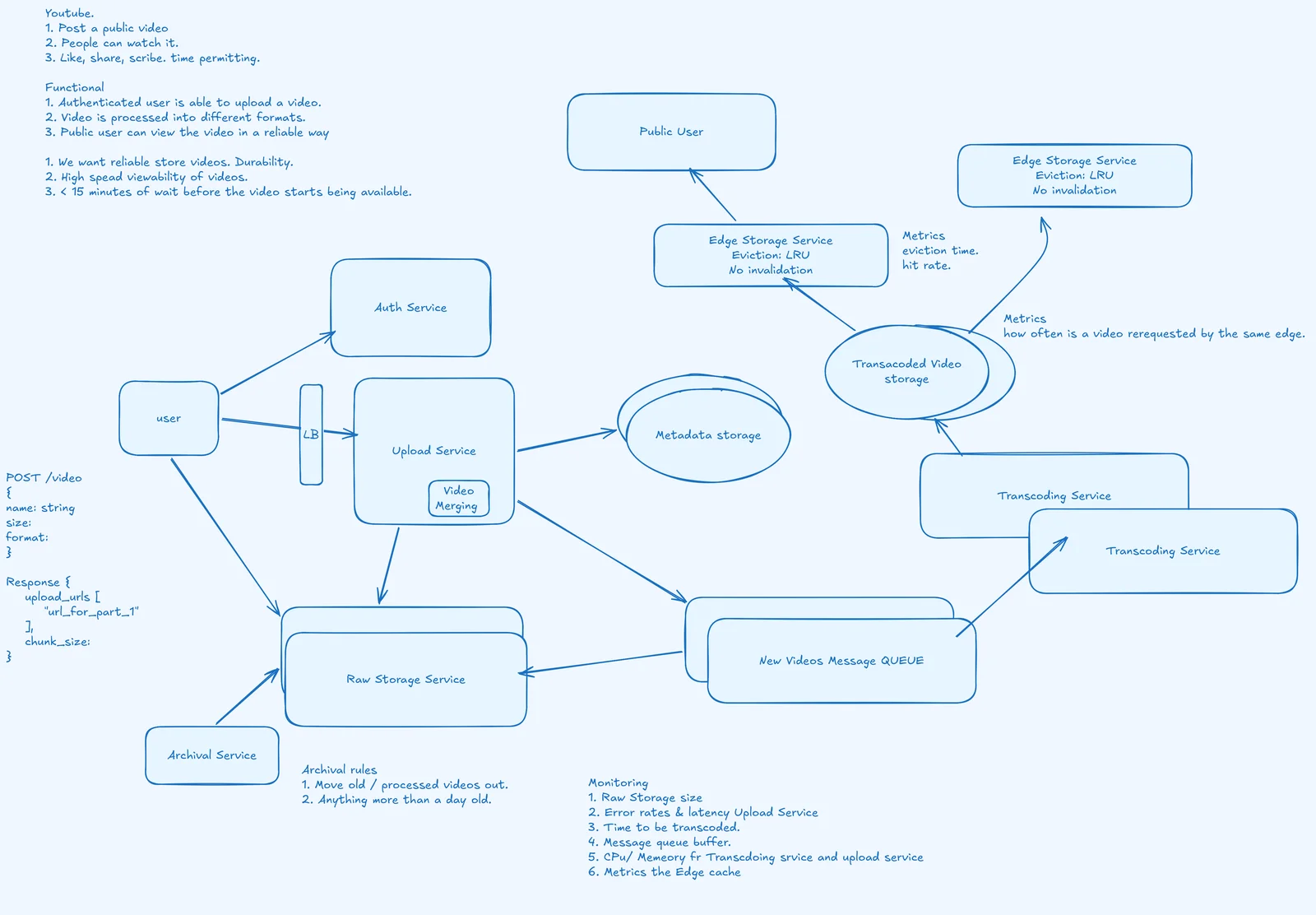
A system design interview is not just about knowing solutions. It is about choosing between them, explaining why, and defending those decisions as constraints evolve. So I got down to it and started preparing seriously. Resources from Hello Interview, ByteByteGo, and System Design Fight Club helped massively in understanding the landscape and the common patterns interviewers expect candidates to know.
With prep done, I scheduled a series of interviews. When I failed the first one, I chalked it up to a bad day. The second rejection had me worried. By the third, it became clear that I was still missing something. The frustrating part was that feedback from real interviews was limited and often hard to act on. I tried a few mock interview services and they helped, but the feedback sometimes felt too generic to build on.
In one interview, I was told to mention more generic names — “cache” instead of Redis. In another, I was told I should have specified which cache I would use — like Redis. I understood that context mattered and interviewers had different expectations, but I had nowhere to discuss why those answers were evaluated differently or how I should have navigated each interview. More random mocks were no longer helping me. I needed something more conversational and iterative — which is what eventually became Stressed Systems.
So I asked a friend to do a mock interview with me, and everything changed. His initial feedback sounded familiar: “You did pretty well.” “You probably just need more practice.” But then he added one comment: “Maybe go more in depth on some topics.” That confused me because I thought I had gone in depth.
Eventually, we realized what was happening. I had skipped over certain details because they felt too obvious to explain. But interviewers cannot evaluate assumptions inside your head. They can only evaluate what you communicate. That was the light bulb moment for me. Once we started discussing specific moments in detail, things began making sense very quickly. I finally understood where I was falling short and what the interview was actually testing.
Real engineering work and system design interviews overlap heavily, but they are not the same thing. At work, you have time to clarify requirements, revise decisions, ask teammates questions, revisit tradeoffs, and gradually refine a solution over days or weeks. A system design interview compresses all of that into 45 minutes of visible reasoning. Once I understood that difference, I approached future interviews very differently and eventually started clearing multiple system design rounds with far more confidence.
That experience eventually became the motivation for StressedSystems. I wanted a place where engineers could practice system design interviews and receive detailed, conversational feedback instead of generic scoring. During launch week, I’m offering free mock interview slots for engineers preparing for system design interviews. If that sounds useful, give it a try.